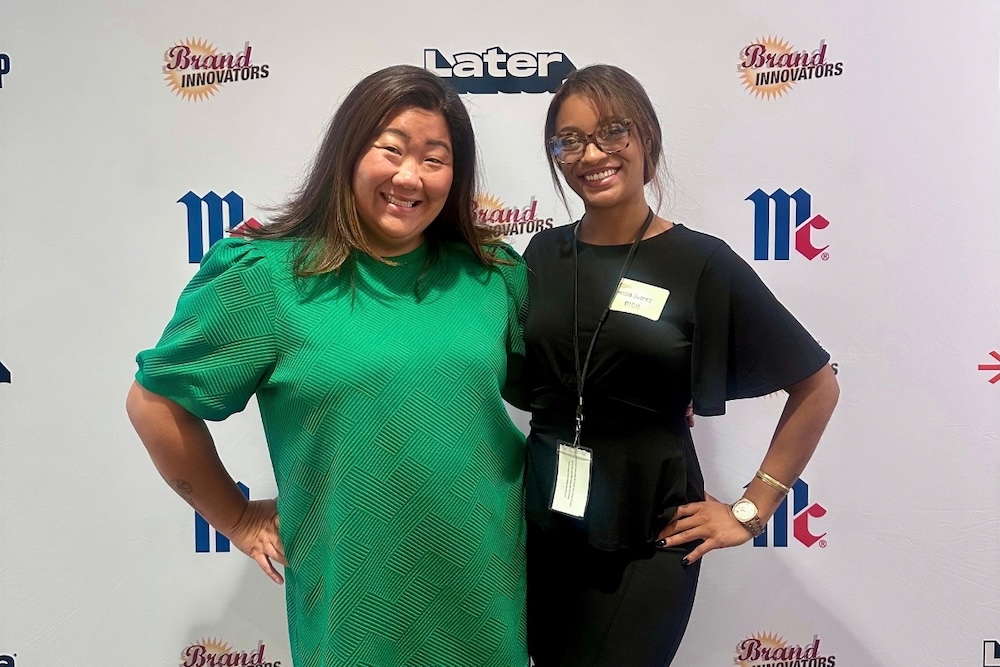
Earlier this month, we spent the day at Brand Innovators’ Building the Future: Marketing for a New Era of Growth summit at McCormick’s Hunt Valley headquarters. Speakers from Under Armour, McCormick, Pompeian and other brands covered a lot of ground, from customer journeys and creator partnerships to product innovation and community.
3 marketing lessons from the Brand Innovators summit at McCormick
Different speakers, different categories, but a few ideas kept resurfacing.
Customers don’t experience a brand the way the brand is organized internally.
An audience isn’t the same thing as a community.
And a creator’s real value isn’t their reach. It’s their ability to make a brand feel like it belongs somewhere new.
Here’s what each one looked like in practice.
The customer doesn’t see your org chart
Under Armour made this point clearly, and twice. Jillian Gorman, head of digital experience growth and transformation, spoke in the morning, and Tyler Rutstein, senior vice president of global brand and Americas marketing, joined an afternoon panel. Both conversations returned to the same reality: Customers are not thinking about which internal team owns a given moment.
They are simply deciding whether a brand feels helpful, relevant and consistent.
That might sound obvious, but it changes how brands should plan their work. A campaign can be strong on social and still disappoint if the product page feels unrelated, the offer is unclear or the post-purchase experience does not follow through. From the customer’s perspective, those are not separate problems. They are part of the same interaction.
Tom Rowe, McCormick’s director of global digital experiences, approached the issue through data and personalization. In his discussion about creating seamless experiences across channels, he emphasized the need for teams to work from a shared view of the customer and to take collective responsibility for the full journey.
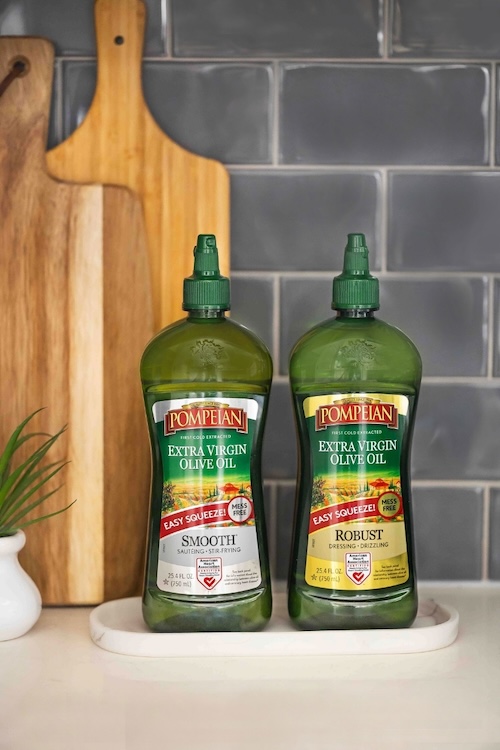
Casey Smith, Pompeian’s director of innovation, made the same point at a much smaller scale. With the Pompeian Squeeze bottle, his team redesigned how olive oil pours: a flexible, recyclable format, a precision spout and a flip-top cap that releases oil only when it’s gently squeezed. Nothing about the oil itself changed. What changed was the 30 seconds someone spends using it. That’s the same idea Under Armour described at the level of an entire customer journey, just visible in something as small as how a bottle feels in your hand. Experience doesn’t live only in the big, connected moments. Sometimes it’s the detail nobody thought to fix.
Community takes more than reach
The session on community, which included Kelly Holechek-Lee of [solidcore] and Cate Ilardo of McCormick, drew a sharp line between having an audience and building a community.
An audience can be big, engaged and genuinely valuable to a brand. But the people in it don’t necessarily have any reason to connect with each other or to stick around once a campaign wraps. A community is different. People in a community keep showing up, and they show up for each other, not just for the brand.
That distinction matters because a lot of brands treat “community” as just another engagement metric. The panel pushed back on that. Panelists described community as something you build slowly, through shared values, repeat participation and giving people a real sense that they belong somewhere.
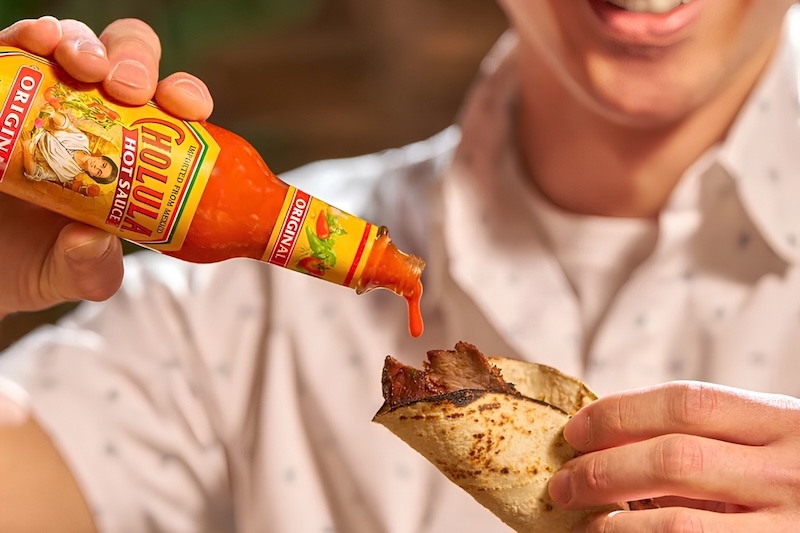
McCormick’s Cholula case study shows what that participation looks like. The brand calls its fans “La Familia” instead of customers, and it’s not just language. It shows up in how people behave. Fans bring travel-sized bottles on vacation. Some get the logo tattooed. That’s not what an audience does; it’s what people do when a brand has become part of how they see themselves.
Cholula also got there by meeting people at restaurant tables before store shelves, so the relationship started at the exact moment someone was already enjoying the product, not being marketed to. That’s the difference the panel was pointing at: Reach gets you noticed, but participation like this is what holds a community together.
The [solidcore] story shows what that looks like when it spreads on its own. Michelle Obama, who has taken the class for more than a decade, talked it up on her podcast during an episode featuring Megan Thee Stallion. About a month later, Megan Thee Stallion posted her first class on TikTok, and hundreds of thousands of people watched her struggle through it. By all public account, nobody paid for that publicity. It happened because people who genuinely love something brought someone else in, in their own voice.
That kind of loyalty can’t be bought with a media budget. It’s earned one interaction at a time, which is exactly why so few brands pull it off.
Creators don’t just distribute. They translate.
McCormick’s partnership with Paris Hilton and her company, 11:11 Media, shows how McCormick is thinking about working with creators. Announced in January 2026, it’s a two-year deal built around content and recipe ideas featuring McCormick products, and it has since grown to include a limited-edition seasoning line coming in February 2027.
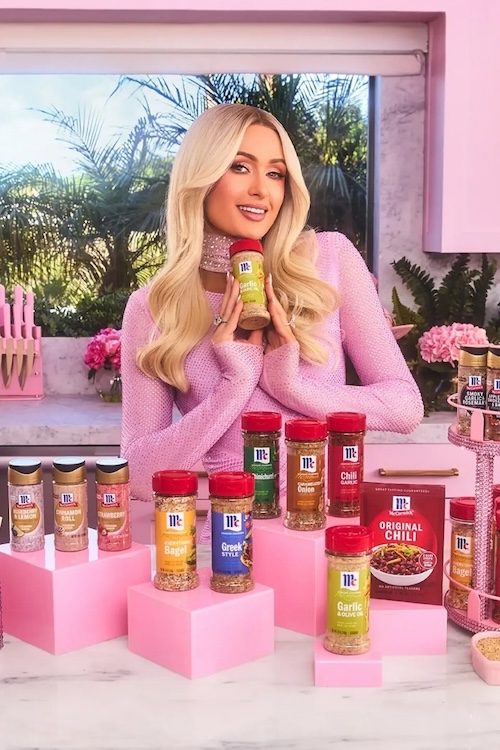
At the summit, McCormick described it as an ongoing relationship, not a one-time ad campaign. That’s the difference between hiring someone for reach and bringing someone in to speak your brand’s language somewhere you haven’t earned a voice yet. Coachella is a strong illustration. McCormick didn’t just buy a booth there. The activation was built to feel like it belonged in that space, not like an ad dropped into the middle of a festival.
Here’s the real point, though: It’s not just that Hilton has more than 52 million followers across platforms. It’s that she already speaks the language of that world fluently, and has for years, in a way McCormick never could on its own. That’s what a creator partnership is for. A creator doesn’t just hand a brand an audience. They translate the brand into a space it didn’t build, so it shows up sounding native instead of like a guest who wandered in. The best creator partnerships don’t turn the creator into someone reading a script. They give that person enough freedom to still sound like themselves, because that’s the whole reason the translation works.
When that balance is missing, people can tell. The content may still reach a lot of viewers, but it often feels transactional, like a brand borrowing a room instead of being invited into it. When the fit is right, a creator can make a brand feel like it belongs somewhere new, without ever having to fake fluency in a culture it hasn’t earned.
What we’re taking with us
None of these ideas was entirely new on its own. What stood out was how often they showed up in different forms over the course of one day.
The common thread wasn’t that every brand needs more channels, more content or more campaigns. It was that the moments brands already create need to feel like they belong to the same brand, the same story and the same relationship, whether that’s a product detail, a fan tattoo or a festival activation.
For marketers, that means looking past the individual deliverable and asking a harder question: Does this add up to something the person on the other side actually recognizes as us?