As a media buyer who has spent over 30 years navigating the television and radio landscape, I’ve seen my share of format flips, network affiliation swaps and ownership consolidations. But the recent one-two punch delivered to the Baltimore broadcasting market feels different.

Baltimore’s Broadcast Shake-Up
In the span of just a few weeks, two of Maryland’s most historic broadcast institutions radically altered their DNA. WMAR-TV (Channel 2), the state’s very first television station, made history once again, this time by debuting “anchorless” newscasts. Driven by its parent company, E.W. Scripps, the move gutted local anchors and producers in favor of a reporter-driven, heavily automated stream of news.
Days later, WBAL NewsRadio, the heritage AM giant owned by Hearst, laid off prominent local hosts to fill its daytime lineup with nationally syndicated talkers like Glenn Beck, Mark Levin, and Clay Travis.
For those of us who buy media, these aren’t just programming tweaks. They are earthquake-level shifts in how local audiences consume information. Here is what this means for the industry, the Baltimore market and the future of media buying.
What It Means for the Industry: Efficiency Over Engagement
The broadcast industry is facing intense financial headwinds. Scripps, for example, cited a Q2 revenue decline of nearly $50 million as a catalyst for cutting 270 jobs nationwide and implementing tech-driven, cost-saving measures. Meanwhile, AM radio continues to fight for relevance against streaming and podcasts.
From a corporate perspective, replacing high-paid local talent with automated formats or national syndication is a quick way to balance the books. But it sacrifices the industry’s greatest unique selling proposition: local connection.
Traditional TV and radio cannot outcompete digital algorithms on targeting, but they have historically won on trust. When you strip away the familiar face guiding the evening news or the local voice commiserating about Baltimore traffic or local politics, you degrade the very trust that advertisers pay a premium to associate their brands with. Broadcast is slowly turning its premium local inventory into commoditized content.
What It Means for the Baltimore Market: The End of the “Halo Effect”
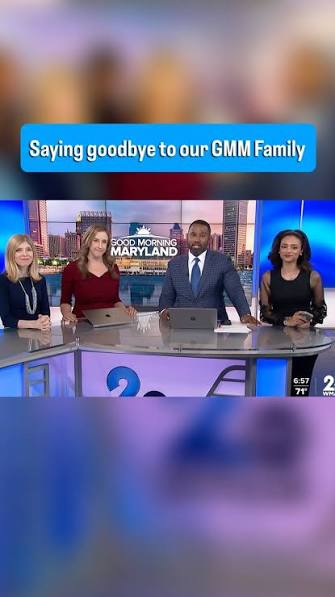
Baltimore is a proudly provincial town. We care about our neighborhoods, our sports teams and our local flavor. The shift away from local personalities has immediate consequences for regional advertisers.
For three decades, my strategy for local clients has heavily involved leveraging the “halo effect” of trusted local broadcasters. Being associated with respected stations like WBAL-AM or WMAR-TV gave local businesses a powerful sense of credibility and familiarity. A commercial placement on a trusted local station could help businesses establish an immediate connection with the community and reinforce the value of their brand.
Now, if a local listener tunes into WBAL-AM and hears a national commentator talking about Washington, D.C., instead of a Baltimorean discussing Annapolis or Towson, the station loses its hyperlocal relevance. Similarly, WMAR’s anchorless newscast leaves viewers with a disjointed stream of reporter packages that lack the steady, selective voice of an anchor saying, “Here is what matters to your community today.”
For media buyers, this means we can no longer buy “heritage call letters” on autopilot. A station’s legacy in Baltimore means nothing if the content on the air could just as easily be playing in Boise or Omaha.
What It Means for the Future: Evolving the Buy
So, where do we go from here? We don’t stop buying broadcast, but we change how we buy it.
1. Demand Lower Rates for Syndication: If a station is piping in national content, local advertisers should no longer pay premium local rates. If we want national reach, we can buy it programmatically. Local rates must reflect the loss of local talent.
2. Shift to True Local Equivalents: We will pivot client dollars toward the outlets that are still investing in local “boots on the ground.” Stations that retain strong, localized news teams and community-focused radio programming will scoop up the local ad dollars left on the table by WMAR and WBAL’s corporate cost-cutting.
3. Embrace New Local Influencers: The local connection hasn’t died; it has just migrated. Advertisers need to lean more heavily into local podcasts, neighborhood-specific digital newsletters and Baltimore-based social media influencers who possess the community trust that legacy broadcast stations are willingly giving up.
Ultimately, these moves by WMAR-TV and WBAL-AM are survival tactics for an evolving media landscape. But as a buyer, my loyalty isn’t to a station’s legacy. It’s to my clients’ return on investment.